

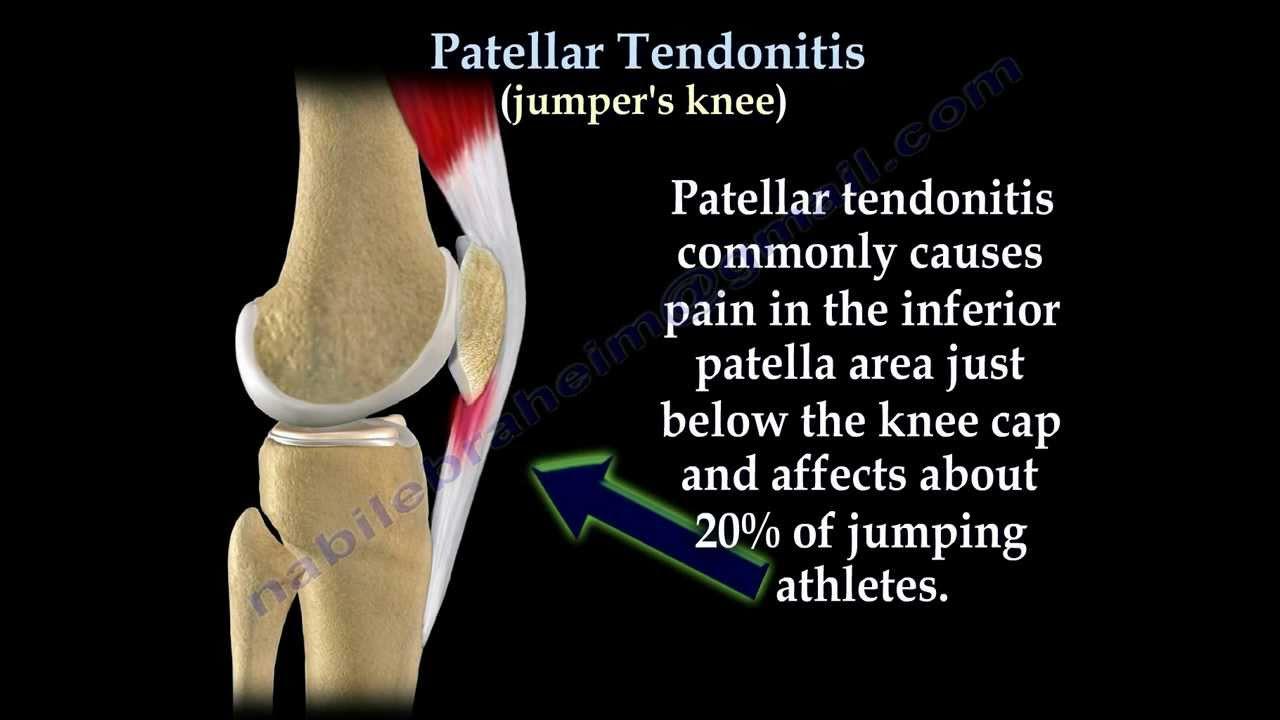
A Closer Look at Patellar Tendinopathy in Jumping Athletes
Patellar tendinopathy, commonly known as “jumper’s knee,” has long posed a significant challenge for athletes participating in jumping sports such as basketball, volleyball, and track and field. A recent article published in Cureus offers an in-depth review of this prevalent overuse injury, shedding light on its causes, symptoms, and emerging treatment options. As competitive demands intensify and training regimens grow more rigorous, understanding patellar tendinopathy’s impact has never been more critical. This comprehensive review not only explores the latest research but also provides insights for athletes, coaches, and medical professionals aiming to prevent and manage this debilitating condition.
Understanding the Causes and Risk Factors of Patellar Tendinopathy in Jumping Athletes
Patellar tendinopathy predominantly occurs due to repetitive strain and overload on the knee’s extensor mechanism, especially in athletes engaged in sports involving frequent jumping and landing. The continuous high-impact forces generate microtraumas within the patellar tendon, impairing collagen fiber alignment and leading to degenerative changes rather than classic inflammation. Intrinsic factors such as age, muscle imbalances, and biomechanical abnormalities significantly contribute to the tendon’s vulnerability. For instance, weakened quadriceps muscles or tight calf muscles can increase tensile stress on the tendon. Moreover, anatomical variations, including patellar alta or lower limb malalignment, further exacerbate the mechanical load during jumping activities.
Extrinsic risk factors primarily revolve around training errors and environmental conditions. Overtraining without adequate rest, sudden increases in jump frequency or intensity, and insufficient warm-up routines can markedly elevate injury risk. Additionally, shoe type and playing surfaces may influence tendon stress, with harder courts contributing to greater impact forces on the knee. The table below summarizes key factors associated with patellar tendinopathy in jumping athletes:
| Category | Key Risk Factors |
|---|---|
| Intrinsic |
|
| Extrinsic |
|
Latest Diagnostic Techniques Enhancing Early Detection and Treatment
Advancements in imaging technologies have revolutionized the early detection of patellar tendinopathy, particularly among athletes engaged in jumping sports. High-resolution ultrasonography now allows clinicians to visualize microstructural changes such as collagen disarray and neovascularization with unprecedented clarity. Additionally, elastography has emerged as a breakthrough tool, offering quantitative assessment of tendon stiffness that aids in differentiating early tendinopathic changes from normal variations. These modalities enable timely diagnosis before clinical symptoms exacerbate, facilitating prompt intervention and improved prognoses.
Emerging diagnostic methods also integrate biochemical markers and functional evaluations, enhancing the accuracy of tendon pathology assessments. Key components include:
- Serum biomarkers: Detection of inflammatory cytokines and collagen degradation products.
- Biomechanical analysis: Real-time force plate and motion capture systems to assess load distribution.
- Artificial intelligence: Machine learning algorithms interpreting imaging data for early irregularities.
| Technique | Purpose | Advantage | |||||||||||||||||||||||||
|---|---|---|---|---|---|---|---|---|---|---|---|---|---|---|---|---|---|---|---|---|---|---|---|---|---|---|---|
| Ultrasonography | Visualize tendon microstructure | High resolution, real-time imaging | |||||||||||||||||||||||||
| Elastography | Measure tendon stiffness | Quantitative tissue characterization | |||||||||||||||||||||||||
AI-assisted Imaging
If you’d like, I can provide a text summary or help with integrating this into your content as well! Effective Rehabilitation Strategies and Preventive Measures for Long-Term RecoveryRehabilitation for athletes suffering from patellar tendinopathy requires a multifaceted approach centered on progressive loading and biomechanical correction. Eccentric and isometric exercises have proven especially effective in reducing tendon pain and improving functionality by promoting collagen synthesis and tendon remodeling. Additionally, incorporating proprioceptive training and neuromuscular re-education aids in restoring proper jump mechanics, which is crucial for athletes in sports demanding repetitive high-impact loading. Modalities such as shockwave therapy and platelet-rich plasma (PRP) injections are also gaining traction as adjunct treatments, though their long-term efficacy continues to be evaluated in clinical trials. Prevention hinges on a structured training regimen that balances intensity with adequate rest, minimizing the risk of chronic overload. Effective strategies include:
Insights and ConclusionsIn conclusion, this comprehensive review of patellar tendinopathy highlights the significant impact of the condition on athletes engaged in jumping sports. With its high prevalence and potential to hinder athletic performance, early diagnosis and effective management remain critical. As research continues to evolve, the findings underscore the need for tailored prevention strategies and evidence-based treatment protocols to support affected athletes. Continued attention from sports medicine professionals will be essential in mitigating the burden of patellar tendinopathy and promoting long-term musculoskeletal health in this high-risk population. 
Atticus Reed
A journalism icon known for his courage and integrity. Related Posts



|