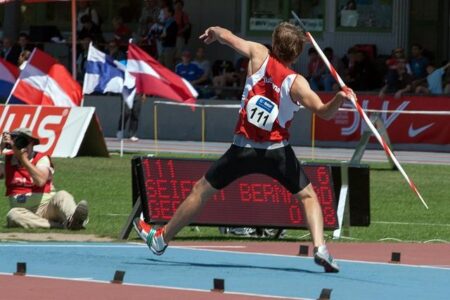

Canada’s Lepage and Oudenaarden captured the spotlight at the Pan American Combined Events Championships held in Ottawa, delivering outstanding performances to claim the titles in their respective categories. Showcasing remarkable skill and endurance, both athletes secured victories that highlight Canada’s growing prominence in multi-discipline track and field events on the international stage. The competition drew top talent from across the Americas, but it was Lepage and Oudenaarden who stood out, affirming their status as leading figures in combined events.
Canada’s Lepage and Oudenaarden Dominate Pan American Combined Events in Ottawa
Canada’s Kevin Lepage and Sarah Oudenaarden showcased outstanding performances at the Pan American Combined Events Challenge held in Ottawa this weekend. Lepage clinched the men’s decathlon title with a personal best score, demonstrating versatility and resilience across all ten disciplines. Meanwhile, Oudenaarden dominated the women’s heptathlon, setting new national marks and reaffirming her status as a rising star in combined events. Their impressive point tallies secured Canada’s position at the top of the medal table, much to the delight of the home crowd.
The competition, drawing athletes from across the Americas, was marked by fierce battles and several standout moments, including Lepage’s explosive 100m sprint and Oudenaarden’s flawless high jump technique. Below is a summary of their key event performances:
| Athlete | Event | Performance | Points |
|---|---|---|---|
| Kevin Lepage | 100m | 10.85s | 900 |
| Kevin Lepage | Long Jump | 7.65m | 950 |
| Sarah Oudenaarden | 200m | 23.92s | 940 |
| Sarah Oudenaarden | High Jump | 1.85m | 1010 |
- Home Advantage: Both athletes credited the supportive local crowd for boosting their energy and focus.
- Future Prospects: Their victories solidify their places as top contenders for upcoming World Athletics Championships.
- Event Highlights: Intense competition and personal records made the event a memorable showcase of athleticism.
In-Depth Analysis of Winning Techniques and Training Regimens
Both Lepage and Oudenaarden demonstrated exceptional versatility and endurance, a testament to their rigorous and well-structured training schedules. Their preparation focused heavily on balancing speed, strength, and technique across the multiple disciplines of the combined events. Key facets of their regimen included:
- Periodized training cycles optimizing peak performance during competition season.
- Cross-disciplinary drills incorporating sprint mechanics, jumping technique, and throwing power.
- Recovery protocols such as active rest days, physiotherapy, and nutrition planning to prevent injury.
Attention to detail in both physical conditioning and mental resilience set them apart, with data-supported approaches to maximize their performance windows. Their coaches emphasized tailored load management and technical refinement to adapt dynamically to each phase of the competition, ensuring consistent scoring across events.
| Training Component | Focus Area | Weekly Hours |
|---|---|---|
| Speed & Agility | Acceleration drills, sprint intervals | 6 |
| Technical Skills | Jumping form, throwing mechanics | 8 |
| Strength & Conditioning | Weight training, plyometrics | 5 |
| Recovery & Mental Prep | Therapy, visualization, meditation | 3 |
Expert Recommendations for Aspiring Combined Events Athletes
Consistency and versatility remain the cornerstone traits for athletes aiming to excel in combined events. Experts emphasize allocating training time evenly across the different disciplines to build a balanced skill set and avoid over-specialization. A strategic rotation between sprints, jumps, throws, and endurance work not only enhances overall conditioning but also reduces injury risk. Seasoned coaches recommend tailoring periods of focused skill development with recovery phases, allowing athletes to peak during major competitions.
Beyond physical preparation, mental fortitude plays an indispensable role. Elite combined event athletes develop detailed competition plans, studying opponents’ strengths while remaining adaptable under pressure. Incorporating techniques such as visualization and mindfulness can sharpen concentration during high-stakes moments. Below is a summary of key expert tips for aspiring combined events athletes:
- Balanced Training: Devote equal attention to all event disciplines.
- Recovery Strategy: Prioritize rest and injury prevention methods.
- Mental Conditioning: Use psychological tools to improve focus and resilience.
- Competition Intelligence: Plan race-day tactics based on opponent analysis.
- Technical Mastery: Fine-tune form to maximize efficiency in each event.
| Focus Area | Training Tip | Outcome |
|---|---|---|
| Speed & Power | Short sprints and plyometrics | Explosive starts and jumps |
| Endurance | Interval running and tempo sessions | Sustained energy across events |
| Technique | Video analysis and drills | Improved efficiency and reduced errors |
| Mental Preparation | Visualization and breathing exercises | Enhanced focus and race-day calm |
Future Outlook
As the Pan American Combined Events Championships conclude in Ottawa, Canada’s Damian Lepage and Maureen Oudenaarden emerge as the standout champions, underscoring the nation’s growing prowess in multi-discipline athletics. Their strong performances not only secured top honors on home soil but also signal promising momentum for upcoming international competitions. With this victory, both athletes have set a high standard for the region, inspiring their peers and fans alike as they continue to elevate the profile of combined events in the Pan American athletics community.