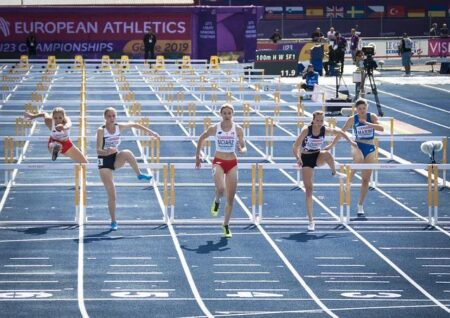

At the Edmonton Track Classic on Saturday, Sadé McCreath shattered expectations by setting a new Canadian women’s 100-meter record, sprinting to an electrifying time of 10.86 seconds. The standout performance not only marked a historic moment in Canadian athletics but also positioned McCreath as a formidable contender on the international sprinting stage. Her record-breaking run captured the attention of fans and experts alike, signaling a significant breakthrough in the nation’s sprinting legacy.
Sadé McCreath Sets New Standard with Record-Breaking 100m Sprint in Edmonton
In a stunning display of speed and determination, Sadé McCreath shattered the Canadian women’s 100m record by clocking an electrifying 10.86 seconds at the Edmonton meet. This historic run not only thrust McCreath into the national spotlight but also positioned her among the elite sprinters on the global stage. Spectators at the event were treated to a flawless performance as McCreath powered through the track with precision and explosive energy, setting a new benchmark for future Canadian athletes.
Key highlights from McCreath’s record-breaking run include:
- Wind Speed: +1.8 m/s, well within legal limits
- Reaction Time: 0.136 seconds, showcasing her lightning-fast start
- Race Split: Maintained consistent speed through the final 40 meters
| Athlete | Previous Canadian Record | New Record | Date | Location |
|---|---|---|---|---|
| Sadé McCreath | 10.92 seconds | 10.86 seconds | June 2024 | Edmonton |
This record is expected to boost McCreath’s momentum as she sets her sights on international competitions later this year. Analysts praise her blend of raw power and refined technique, anticipating her to be a formidable contender moving forward. As Canadian athletics embraces this new era, McCreath’s performance marks a pivotal moment for women’s sprinting nationwide.
Analyzing McCreath’s Technique and Training Regimen Behind Her Breakthrough Performance
Sadé McCreath’s remarkable 10.86-second sprint to the Canadian women’s 100m record is no accident. Central to her breakthrough is a meticulously crafted training regimen that blends explosive power development with refined sprint mechanics. Key elements include:
- High-Intensity Interval Training (HIIT): Focused bursts of maximum effort sprinting paired with recovery periods to maximize speed endurance.
- Technical Sprint Drills: Emphasis on optimal foot strike, knee drive, and arm mechanics to shave off milliseconds from each phase of her run.
- Strength & Conditioning: Heavy emphasis on lower body strength, particularly in glutes and hamstrings, to generate maximum propulsion.
Her coaching team also employs a data-driven approach, utilizing biomechanics analysis to continually fine-tune her form. Recovery protocols such as physiotherapy and targeted flexibility work ensure sustained peak performance throughout the season. Below is a snapshot of her typical weekly training split:
| Day | Training Focus | Duration |
|---|---|---|
| Monday | Acceleration & Sprint Drills | 90 min |
| Tuesday | Strength Training (Lower Body) | 75 min |
| Wednesday | Recovery & Flexibility | 60 min |
| Thursday | Speed Endurance Sessions | 85 min |
| Friday | Strength Training (Upper Body/Core) | 70 min |
| Saturday | Competition Simulation & Starts | 90 min |
| Sunday | Rest & Recovery | – |
What This Record Means for Canadian Women’s Sprinting and Future Talent Development
The breakthrough achieved by Sadé McCreath not only shatters the Canadian women’s 100m record but also serves as a compelling marker of progress within national sprinting. Her remarkable time of 10.86 seconds signals that Canadian female sprinters are increasingly competitive on the global stage, fostering a renewed sense of ambition among athletes and coaches alike. This new benchmark elevates expectations and reinforces the importance of investing in specialized training programs tailored for top-tier performance.
Looking forward, this milestone is set to influence future talent development across the country. Athletics programs and grassroots initiatives are now better positioned to:
- Identify emerging sprinters through enhanced scouting and community engagement
- Integrate cutting-edge sports science to optimize training and recovery
- Expand access to high-quality coaching and facilities nationwide
Such strategic shifts aim to build a robust pipeline of sprinting talent capable of sustaining and surpassing McCreath’s achievement in the years to come.
| Aspect | Impact on Sprinting |
|---|---|
| Record Performance | Inspires national confidence & global competitiveness |
| Talent Development | Boosts recruitment & training innovation |
| Community Engagement | Encourages youth participation and grassroots growth |
Final Thoughts
Sadé McCreath’s remarkable performance at the Edmonton meet not only set a new Canadian women’s 100m record but also signaled her rising prominence on the national and international sprinting stage. With a time of 10.86 seconds, McCreath has firmly established herself among Canada’s elite athletes, generating excitement and anticipation for her future competitions. As the season progresses, all eyes will be on McCreath to see how she continues to push the boundaries of Canadian sprinting excellence.