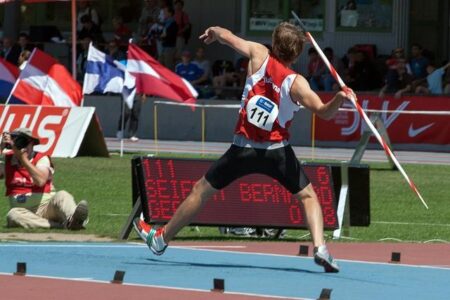
In a candid interview with MileSplit United States, elite race walker Moscoso offered a striking perspective on the physical and mental demands of his sport, asserting that race walking is “100 times harder than running.” As the discipline steadily gains recognition, Moscoso’s comments shed light on the rigorous training, technical precision, and endurance required to compete at the highest levels. This revelation comes as race walking continues to challenge long-held assumptions about athletic difficulty and endurance events in track and field.
Moscoso Explains Why Race Walking Challenges Athletes Beyond Running
Race walking demands a unique combination of endurance, technique, and mental fortitude that sets it apart distinctly from running. According to Moscoso, the challenge lies not only in maintaining speed over long distances but in adhering to the strict rules governing form – specifically, keeping one foot in contact with the ground at all times and ensuring the leading leg remains straight. These constraints force athletes to engage muscle groups differently, placing increased stress on hips, shins, and calves, which can lead to fatigue levels far beyond those experienced in traditional running events.
To illustrate the complexities involved, Moscoso breaks down the physiological and technical hurdles with the following points:
- Strict technique enforcement: Judges penalize form violations, requiring constant self-monitoring.
- Energy efficiency: Unlike running, race walkers cannot rely on airborne phases and must optimize propulsion.
- Muscular endurance: Walking technique engages stabilizers and postural muscles intensively.
- Mental stamina: Athletes face the dual strain of physical exertion and technique compliance under competitive pressure.
| Aspect | Race Walking | Running |
|---|---|---|
| Ground Contact | Continuous one foot on ground | Flight phase between steps |
| Leg Straightness | Leading leg straight until vertical | No restriction |
| Muscle Groups Emphasized | Hips, shins, calves | Quads, hamstrings, calves |
| Impact on Joints | Lower impact, high strain on hips | Higher impact, more knee stress |
The Physical and Technical Demands That Make Race Walking Unique
Unlike running, race walking demands an exceptional blend of endurance, strength, and precise technique that pushes athletes to their physical limits. The sport enforces a strict rule: one foot must remain in contact with the ground at all times, while the advancing leg must straighten from the moment of first contact until it passes under the body. This unique constraint forces competitors to engage muscle groups differently, particularly in the hips and core, to maintain the required form without breaking into a run. Consequently, walkers endure intense muscular fatigue in the lower body and require superior flexibility and joint mobility to sustain speed without penalty.
Key technical challenges include:
- Maintaining continuous ground contact to avoid disqualification
- Straightening the lead leg while propelling forward efficiently
- Optimizing cadence and stride length under strict biomechanical constraints
- Adapting balance and posture to minimize energy loss
| Factor | Race Walking | Running |
|---|---|---|
| Ground Contact | Continuous | Intermittent (Flight phase) |
| Leg Movement | Straightened | Flexible, bent |
| Muscle Focus | Hips & Core | Legs & Calves |
| Energy Efficiency | Lower, due to form constraints | Higher |
Expert Tips From Moscoso on Improving Race Walking Endurance and Technique
Maximizing endurance in race walking demands a rigorous blend of physical conditioning and mental discipline. Moscoso emphasizes incorporating interval training and long-distance steady-state walks into your weekly routine to boost cardiovascular capacity without compromising form. “Race walking engages muscles in a way running doesn’t; it’s about controlled strength and efficiency,” he notes. Integrating core stability exercises and flexibility work helps maintain posture, which is essential for conserving energy during extended races.
Refining technique is equally vital. Moscoso advises focusing on hip rotation and foot placement to optimize each stride. The heel must strike the ground first with a straightened leg, followed by a smooth roll through the foot to the toe, preventing disqualification and improving speed. Below is a quick-reference table breaking down key technical elements essential for race walking success:
| Technique Aspect | Key Focus | Common Mistake |
|---|---|---|
| Heel Strike | Make firm, first contact with the heel | Landing flat-footed or on toes |
| Leg Straightening | Keep the knee straight from initial contact to mid-stance | Bending the knee too early |
| Hip Rotation | Engage hips to increase stride length | Limited hip movement causing short steps |
| Arm Swing | Controlled, bent arms swinging forward and back | Crossing arms in front of the body |
Closing Remarks
In highlighting the extreme physical and mental demands of race walking, Moscoso offers a revealing perspective on a sport often overshadowed by traditional running events. His assertion that race walking is “100 times harder than running” challenges common perceptions and underscores the discipline, technique, and endurance required to compete at the highest level. As the conversation around race walking grows, athletes like Moscoso continue to push boundaries, bringing much-needed attention to this rigorous and compelling athletic pursuit.